


What Clinical Scenarios Are Best Suited for Wireless Probe‑Based Handheld Color Doppler Ultrasound
- 2026-07-23
- 1576
- Guangzhou Sonostar Technologies Co., Limited
Traditional ultrasound has a clear limitation: patients must go to the ultrasound department and wait in line. For patients in intensive care, those recovering from surgery, or those with limited mobility, the transfer itself carries risks. Leveraging years of technological expertise in probe?based handheld ultrasound and experience serving markets in over 100 countries and regions, SonoStar now outlines the clinical scenarios where wireless probe?based handheld color Doppler ultrasound truly excels. This guide helps healthcare institutions and clinical departments understand where this equipment fits best.

Emergency and Acute Care – Making the Most of the Golden Hour
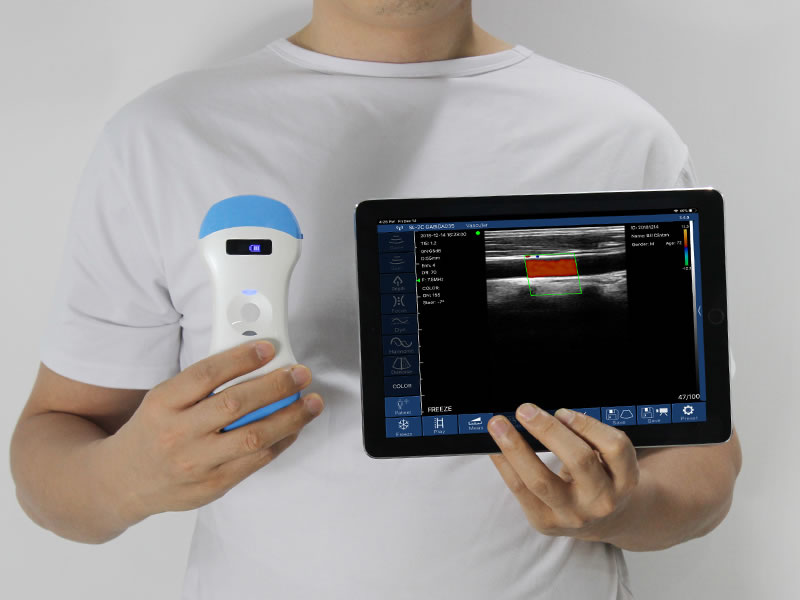
Emergency departments frequently deal with trauma, chest pain, and abdominal pain—conditions that demand rapid decisions. The SonoStar wireless handheld color Doppler ultrasound, for example, is about the size of a smartphone and weighs roughly 300 grams. Physicians can carry it in their pocket and perform scans right in the ambulance or at the rescue site. For FAST (Focused Assessment with Sonography for Trauma) examinations, the traditional approach requires a cart?based system; now, a probe and a tablet are all you need. The device clearly reveals intra?abdominal free fluid, pneumothorax, and other critical findings, buying precious time for subsequent interventions. Low?latency Wi?Fi direct technology ensures real?time image transmission without noticeable lag.
ICU and Bedside Diagnostics – Reducing Transfer Risks
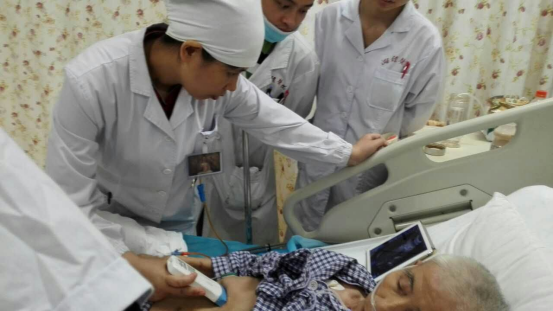
ICU patients are often connected to ventilators, monitors, and multiple drains. Moving them to the ultrasound department is time?consuming and carries risks of tube dislodgement and blood pressure fluctuations. A handheld color Doppler ultrasound allows clinicians to perform cardiac function assessments, lung ultrasound (e.g., B?line evaluation for pulmonary edema), and deep vein thrombosis screening right at the bedside. For post?operative patients, immediate bedside evaluation of fluid or air collections enables faster decisions on whether re?intervention is needed. In these scenarios, portability directly translates into patient safety.
Primary Care and Rural Outreach – Lowering the Barrier to Use
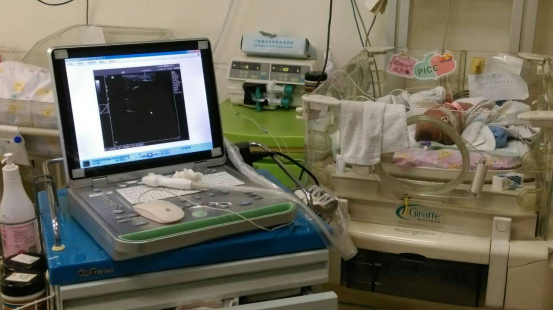
Community health centers and village clinics often lack ultrasound equipment, or they rely on old cart?based machines that are complicated to operate and take up precious space. Handheld color Doppler ultrasound paired with a smartphone or tablet app significantly reduces the learning curve—primary care providers can become proficient after short?term training. In public health screening programs—such as initial liver and gallbladder disease screening or thyroid nodule detection—the lightweight design makes it easy to carry during rural visits, and bulk procurement costs are far lower than traditional systems. With intelligent noise reduction and beam?forming algorithms, image resolution and tissue contrast meet the demands of initial screening, ensuring that obvious abnormalities are not missed.
Interventional Procedures and Surgical Visualization – Solving Disinfection Challenges
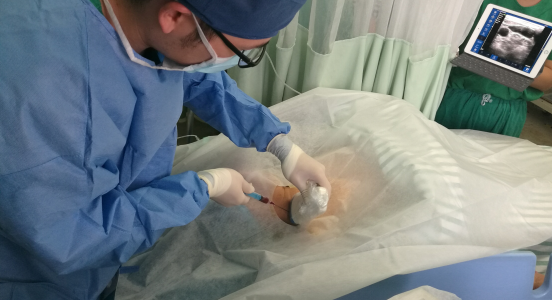
For procedures like anesthesia nerve blocks, PICC line placement, and intra?articular injections, traditional ultrasound probe cables are difficult to disinfect, and repeated wiping can damage the cable sheath. Wireless probes can be fitted with disposable sterile covers, directly eliminating cross?infection risks and meeting infection control standards. The IP67 waterproof design also allows direct wiping of the probe body with medical disinfectants. In the operating room, the wireless design gives physicians the freedom to adjust angles around the patient without being hindered by cables.
Tele?consultation and Teaching – Leveraging Mobile Device Connectivity
When primary care physicians encounter images they are unsure about, they can instantly share them via WeChat (or other messaging apps) from their phone or tablet to ultrasound specialists at higher?level hospitals for interpretation. This “remote?assisted diagnosis” model effectively addresses a core challenge in hierarchical care—patients’ distrust of local providers. With local scanning and expert interpretation, patients are more willing to stay in the community for care. For teaching hospitals, instructors can view trainees’ scanning in real time and provide immediate feedback on technique.
FAQ
Q: Can handheld color Doppler ultrasound match the image quality of cart?based systems?
A: In terms of resolution and tissue contrast, modern handheld devices with intelligent algorithms now approach the performance of mid?to?high?end portable systems, making them suitable for emergency screening and initial assessments. However, for complex congenital heart disease or fine vascular pathology that demand ultra?high resolution, high?end cart?based systems still have an advantage. The handheld device is positioned as an “instant first?look tool” rather than a “replacement for definitive diagnosis.”
Q: Is there any delay or signal instability with wireless transmission?
A: Wi?Fi direct technology keeps latency in the millisecond range—virtually imperceptible in practice. However, in environments with strong electromagnetic interference (e.g., near MRI suites) or when signals must pass through multiple walls, connectivity may be affected. We recommend confirming connection stability before starting each examination.
Q: How can a primary hospital quickly recoup the investment?
A: Handheld color Doppler systems have a low unit price. With bulk deployment, clinics can introduce bedside ultrasound billing items, while also reducing patient outflow and associated revenue loss. In some regions, health insurance policies already cover bedside ultrasound—check with your local authorities for specific details.
The core value of wireless probe?based handheld color Doppler ultrasound lies in “bringing ultrasound out of the department and directly to the clinical frontline.” Emergency care saves time, ICUs reduce risks, primary care expands coverage, and interventional procedures enhance safety—all scenarios where traditional equipment is either impractical or inaccessible. When selecting a device, focus on three key factors: mature image algorithms, stable wireless connectivity, and a disinfection protocol that meets infection control standards.




 Home
Home Product
 News
News Contact