


Core Clinical Advantages of Wireless Hand‑Held Ultrasound for Clinical Examinations
- 2026-08-11
- 1314
- Guangzhou Sonostar Technologies Co., Limited
Point‑of‑care ultrasound has reshaped bedside diagnosis in modern hospitals. Traditional cart‑based ultrasound systems deliver stable imaging performance, yet they face limitations in mobility, deployment speed and flexible ward‑round usage. Wireless hand‑held ultrasound solves many practical pain‑points in daily clinical work, bringing noticeable improvements for emergency departments, ICU, anesthesiology, OB‑GYN and primary‑care clinics.
This article breaks down the core clinical advantages of wireless hand‑held ultrasound, focusing on real‑world clinical workflow value rather than pure hardware parameters.
High portability supports true bedside and on‑site diagnosis
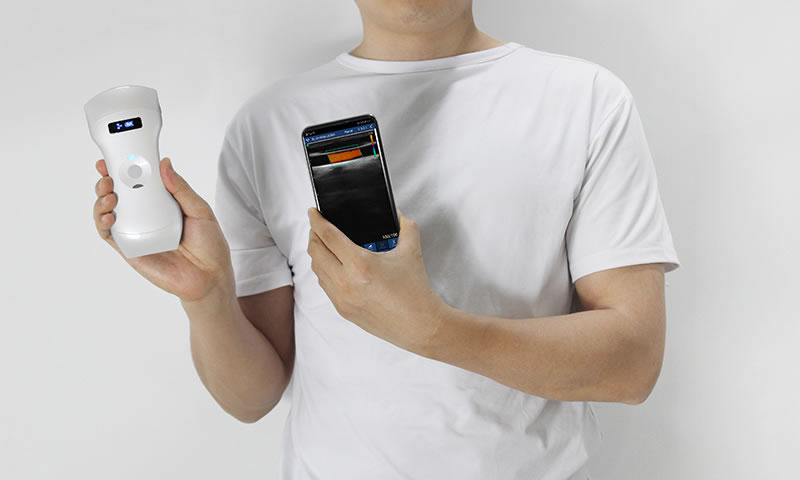
One of the most obvious clinical strengths of wireless hand‑held ultrasound lies in its compact physical design. The probe‑integrated main unit weighs around 230 grams, close to the size of a smartphone, so clinicians can carry it to wards, emergency rooms, ambulance vehicles or remote‑site clinics without heavy cart equipment.
In many clinical scenarios, patients cannot be easily transferred to the ultrasound examination room. Critically‑ill ICU patients, trauma emergency patients, bed‑ridden elderly patients, and patients in pre‑hospital rescue all require on‑site scanning. Wireless hand‑held ultrasound eliminates the restriction of fixed examination rooms. Physicians can complete ultrasound assessment directly beside patient beds, avoiding risks caused by patient transportation and shortening the time from assessment to clinical decision‑making.

For mobile medical missions and grassroots outpatient services, lightweight wireless ultrasound probes greatly reduce transportation burdens for medical teams.
Cable‑free operation optimizes clinical operation workflows
Traditional wired ultrasound probes are constrained by connecting cables. Cables may hinder body‑position adjustment during scanning, get tangled during emergency operations, and bring extra challenges for probe disinfection and ward‑site arrangement.
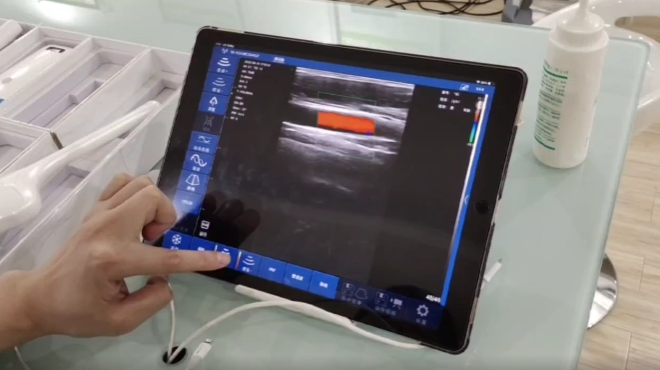
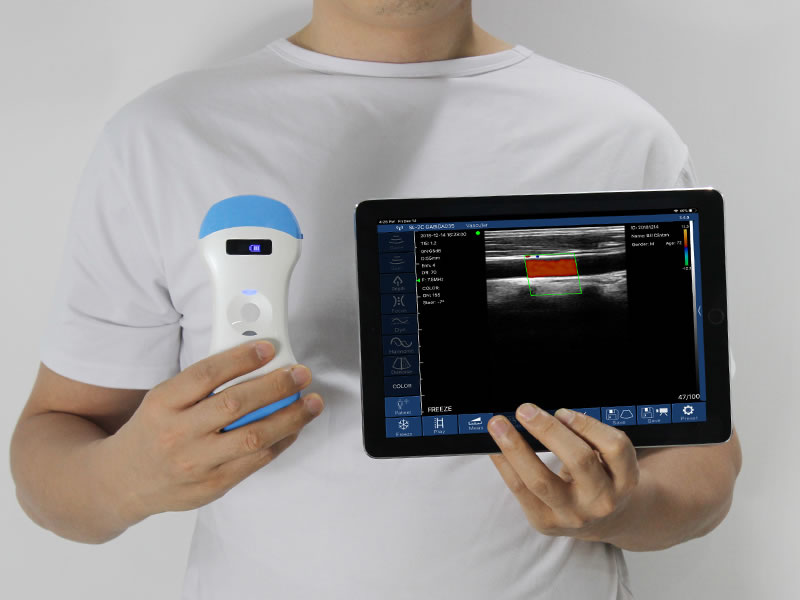
Wireless‑WiFi transmission removes physical cable restraints. Clinicians can move more freely during scanning, especially during ultrasound‑guided puncture, nerve‑block operations and multi‑angle patient assessment. The probe connects wirelessly to smartphones, tablets or Windows‑based terminals, and medical staff can view real‑time ultrasonic images on portable display terminals according to on‑site conditions.
Certain probe models support replaceable‑battery design. Medical teams can swap spare batteries during continuous ward rounds, maintaining long‑duration clinical work without frequent charging interruptions.

Rich probe portfolio covers multi‑department clinical demands
Different clinical departments require corresponding ultrasonic frequency and scanning depth. Mature wireless hand‑held ultrasound systems provide complete probe options to match diversified clinical examination requirements.
Phased‑array probes:adapt for emergency FAST examination, lung and cardiac assessment inside ICU;
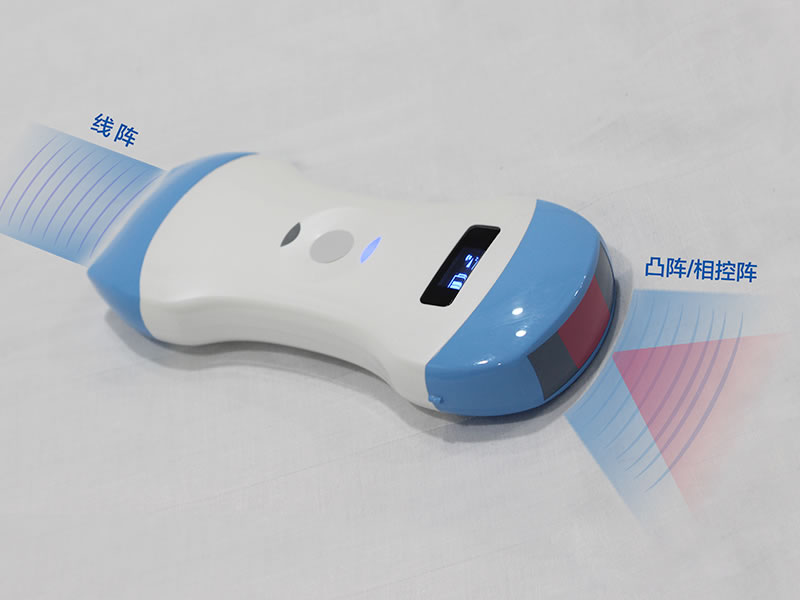
High‑frequency linear probes:fit for vascular access, nerve‑block guidance, musculoskeletal and superficial‑organ examination;
Convex‑array probes:suitable for abdominal screening and obstetric routine assessment;
‑3‑in‑1 multi‑mode probes:integrate convex, linear and phased‑array functions, cost‑effective for general‑purpose emergency and primary‑care scenarios; ‑Endocavity and bi‑plane rectal probes:support gynecological outpatient and prostate bedside evaluation.
Multiple‑mode Doppler functions including Color, PW and PDI are built‑in. Physicians can finish two‑dimensional imaging and blood‑flow assessment on one compact wireless probe device, meeting most routine POCUS clinical screening needs.

Compatible with mainstream hospital IT workflows for data management
linical diagnosis cannot be separated from standardized image storage and hospital system docking. Many wireless hand‑held ultrasound devices support DICOM format output. Scanned images and video clips can be exported in standard medical formats and imported into hospital PACS systems for archiving, case review and medical‑quality control work.
Apart from DICOM output, images can also be saved as JPG and MP4 files. Real‑time image sharing supports remote consultation scenarios. Remote specialists can review bedside ultrasonic images fed back from front‑line clinicians, offering auxiliary diagnostic suggestions for grassroots sites or emergency rescue situations.
Software applications adapt to iOS, Android and Windows operating systems. Hospitals can reuse existing mobile flat‑panel hardware resources without purchasing dedicated display workstations, which brings flexibility for department‑level equipment deployment.
Assists interventional operations to improve procedural safety
Ultrasound‑guided intervention is an important clinical application of wireless hand‑held ultrasound. Many wireless probe models integrate puncture‑assisting functions, such as in‑plane guiding lines, out‑of‑plane auxiliary positioning and needle‑tip visualization enhancement. Individual series add magnetic‑navigation modules to further help operators observe needle positions in real‑time during puncture procedures.
In anesthesiology, vascular access and nerve‑block operations gain real‑time visual feedback. Emergency trauma puncture and drainage procedures can also benefit from bedside wireless ultrasound support. Visual guidance helps reduce blind‑operation risks and improves the success rate of clinical intervention operations.
Flexible deployment brings value for diversified medical institutions
Wireless hand‑held ultrasound delivers differentiated value for different‑scale medical facilities. Large‑scale hospitals can configure multiple wireless probes for ICU, emergency and anesthesiology departments as supplementary POCUS tools, releasing pressure on shared large cart‑based ultrasound equipment.
For small clinics, medical‑aid institutions and remote‑area medical sites, wireless hand‑held ultrasound offers accessible point‑of‑care imaging capacity. It delivers core clinical‑screening functions without occupying large‑size space or bearing high‑end cart‑system investment thresholds, expanding the accessibility of ultrasonic diagnosis.
FAQ
Q1:Can wireless hand‑held ultrasound replace cart‑based color Doppler ultrasound completely?
A:Wireless hand‑held ultrasound focuses on point‑of‑care rapid screening and bedside assessment. It cannot fully replace high‑end cart‑based ultrasound for complex, comprehensive diagnostic tasks. It works as a powerful supplementary tool for clinical front‑line scenarios.
Q2:What operating systems do wireless handheld ultrasound probes support?
A:Compatible with iOS, Android and Windows‑based smart terminals. Clinicians can use existing tablets or mobile devices as display terminals for ultrasonic imaging viewing and operation.
Q3:Can wireless hand‑held ultrasound export DICOM files for hospital PACS?
A:Yes. Qualified wireless hand‑held ultrasound supports DICOM format output, which can connect with hospital PACS for standardized image archiving and case management.
Q4:Is battery life sufficient for continuous ward‑round work?A:Part of the probe series adopts replaceable‑battery solutions. Spare batteries can be swapped during heavy‑load clinical rounds to sustain long‑time scanning tasks. Some probes support charging while working to avoid power‑supply interruptions.
Q5:Which departments are suitable to deploy wireless hand‑held ultrasound?
A:Mainly emergency department, ICU, anesthesiology, OB‑GYN, musculoskeletal rehabilitation, primary‑care clinics and pre‑hospital rescue teams.

Summary
Wireless hand‑held ultrasound brings multiple clinical‑workflow advantages: lightweight portability for true bedside examination, cable‑free flexible operation, rich‑probe‑matrix scenario coverage, hospital‑system‑compatible data management, interventional‑operation auxiliary capacity and flexible deployment for different‑size medical institutions.
As a mature POCUS solution, wireless hand‑held ultrasound effectively expands the application boundary of ultrasonic diagnosis. If you want to learn more about product specifications and clinical‑application cases, you may download our product brochure or book a virtual product demo.




 Home
Home Product
 News
News Contact