


Wireless Bladder Scanner Technology: How 4D Array Scanning Improves Bladder Volume Measurement Accur
- 2026-09-08
- 1033
- Guangzhou Sonostar Technologies Co., Limited
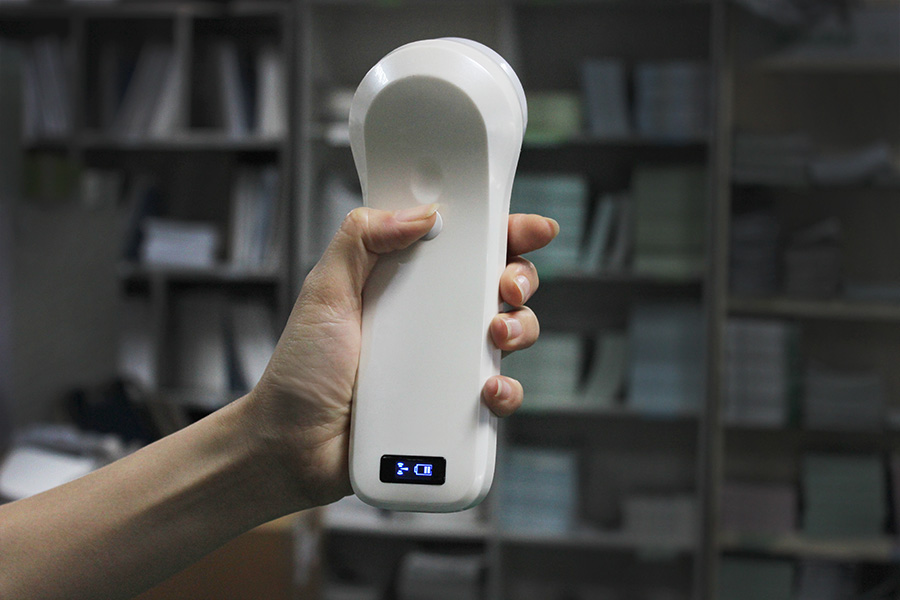
A wireless bladder scanner measures bladder urine volume non-invasively to support catheterization timing decisions and post-void residual monitoring. The measurement technology inside the probe directly determines result accuracy, scan duration and long-term maintenance requirements. Two scanning architectures currently dominate the market: single-chip 3D mechanical scanning and electronic array 4D scanning. This article explains the technical differences between them, using the SonoStar BProbe-2 4D wireless bladder scanner as a reference for how array scanning addresses the limitations of older 3D designs.
1. Technical Limitations of Single-Chip 3D Mechanical Scanning
Early bladder scanners adopted a single-chip 3D design, in which one transducer element rotates or swings mechanically to acquire multiple sectional images, which are then reconstructed into a volume estimate. This architecture is mechanically simple and low-cost, but it carries four inherent limitations.
First, scan and calculation time typically ranges from 4 to 8 seconds per measurement. The transducer must complete a full mechanical sweep before the algorithm can estimate volume, which is uncomfortable for patients and slows down nursing workflow during rounds.

Second, measurement error is typically around 15%. Mechanical sweep introduces geometric distortion, and the reconstruction algorithm must compensate for moving parts, reducing accuracy especially for small-volume or irregularly shaped bladders.
Third, mechanical components wear over time. After extended use, the sweep mechanism develops play and positioning drift, requiring periodic recalibration to maintain stated accuracy.
Fourth, mechanical scanning produces image distortion because the transducer position during a sweep is not perfectly linear. This distortion is baked into the volume calculation and is difficult to remove through software alone.
2. How Electronic Array 4D Scanning Works
The 4D array approach replaces the moving transducer with a fixed electronic array of elements that electronically steer the ultrasound beam across the bladder volume. No mechanical sweep is required — the array acquires multiple planes simultaneously and reconstructs a real-time volume at 10 frames per second.
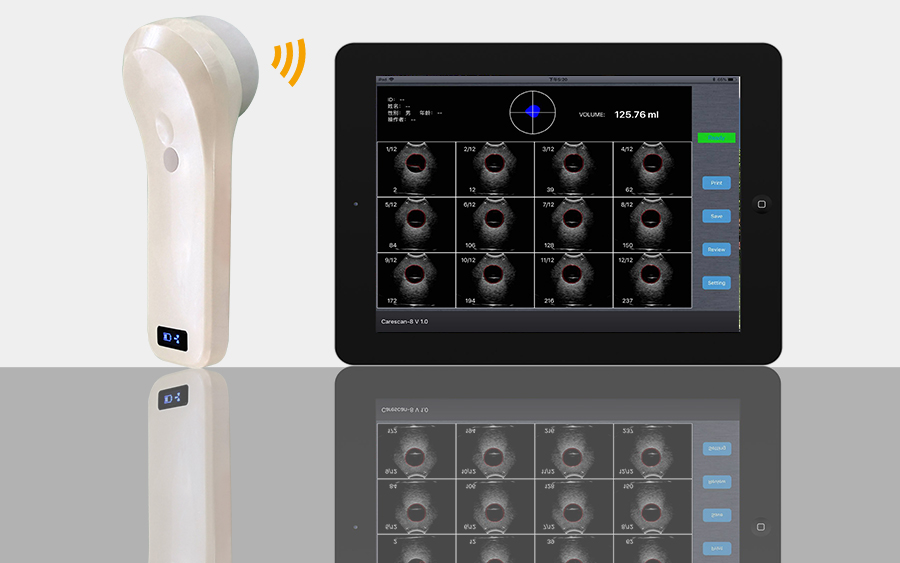
The BProbe-2 implements this architecture with a 2.6 MHz wide-band array probe. During a measurement, the array captures a full bladder volume in under 2 seconds, and the onboard algorithm automatically traces the bladder wall contour and calculates volume. The probe transmits images to an iOS or Android phone or tablet over internal Wi-Fi, with no external network required.
Five technical characteristics distinguish this design from single-chip 3D scanning:

Scan time under 2 seconds versus 4–8 seconds for 3D mechanical scanning, reducing patient discomfort and increasing nursing throughput.
Measurement error below 5% versus approximately 15% for 3D designs, a threefold improvement in accuracy.
No mechanical scan distortion because the array is fixed and beam steering is electronic, eliminating geometric distortion from moving parts.
No recalibration required over the device's lifespan. A high-precision rotary encoder maintains element positioning, so the unit does not drift with age.
Bladder-shape-independent algorithm. The calculation does not require selecting gender or age group, and remains accurate for small-volume bladders, irregular shapes, and post-hysterectomy anatomy where older algorithms produce substantial errors.
3. Key Specifications and What They Mean in Practice
The published specifications of the BProbe-2 illustrate how the technical architecture translates into measurable performance:
Measurement range: 10 ml to 2000 ml, covering both low post-void residual and high urinary retention scenarios
Scan and process time: under 2 seconds per measurement
Display frame rate: 10 frames per second for real-time bladder wall visualization during probe positioning
Battery runtime: approximately 3 hours of active scanning, or over 200 patients per full charge
Charging: USB or wireless charging, full charge in 2 hours
Probe dimensions: 180 mm × 60 mm × 60 mm, weight 420 g, operable single-handedly
Case storage: images and records saved directly on the connected phone or tablet
Printing: supports external wireless thermal printer for bedside report output
Waterproof probe for routine disinfectant wiping

The 420 g weight and single-probe form factor mean the device can be carried on nursing rounds without a cart. Internal Wi-Fi transmission removes the need for a hospital network connection, which matters in isolated wards or facilities with restricted network access.
4. Deployment Scenarios Where Measurement Speed and Accuracy Matter
The technical advantages of array 4D scanning become operationally significant in settings with high measurement frequency or time pressure.
In long-term care and rehabilitation wards, nurses measure post-void residual multiple times per patient per day. Reducing each scan from 4–8 seconds to under 2 seconds, combined with no need to select gender or age presets, shortens the per-patient workflow and lowers the training burden for new staff.
In intensive care, intermittent catheterization timing depends on reliable volume readings. A 5% error band provides a more defensible basis for deciding whether catheterization is needed than a 15% error band, and real-time wall visualization helps confirm correct probe placement before recording a result.
In urology and rehabilitation follow-up, the ability to store cases on a mobile device and print via wireless thermal printer supports longitudinal tracking without requiring a dedicated workstation.
5. Objective Limitations
A wireless bladder scanner is a dedicated volume-measurement instrument, not a general-purpose ultrasound system, and the following limitations should be understood before deployment.
First, it measures bladder volume and visualizes bladder contour; it cannot replace general abdominal ultrasound for kidney, ureter or pelvic organ diagnosis.
Second, measurement accuracy still depends on correct probe placement. Even with an advanced wall-recognition algorithm, an operator who positions the probe off the bladder's sagittal plane will obtain a less reliable result. Basic hands-on training in suprapubic probe positioning remains necessary.
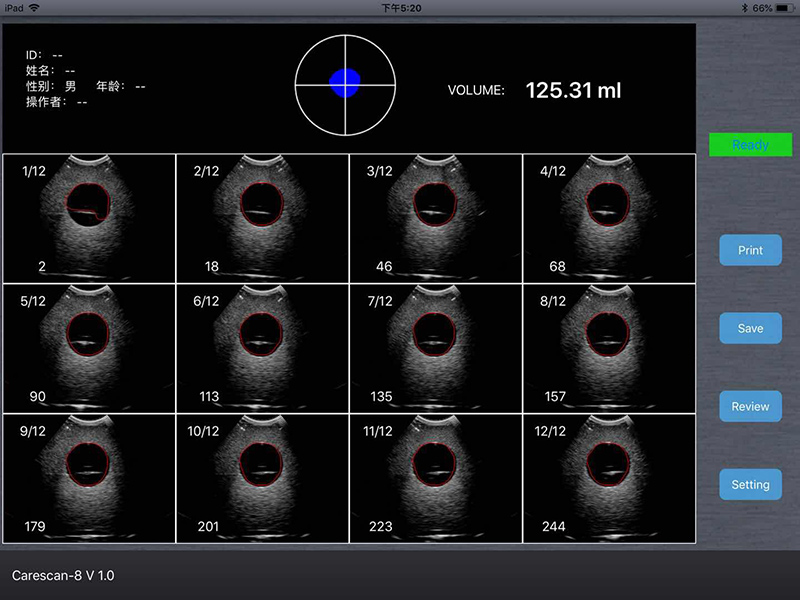
Third, the device relies on a connected phone or tablet as its display. Facilities must standardize on compatible iOS or Android devices and manage device charging and disinfection alongside the probe.
Fourth, the 420 g probe, while portable, is heavier than a general-purpose handheld ultrasound linear probe because it houses the array, battery and wireless module in a single sealed housing.
Conclusion
The shift from single-chip 3D mechanical scanning to electronic array 4D scanning represents a measurable technical upgrade in wireless bladder scanner design. Array scanning reduces measurement time from 4–8 seconds to under 2 seconds, lowers error from approximately 15% to below 5%, eliminates mechanical distortion and removes the need for periodic recalibration.
For facilities that perform frequent bladder volume assessments, these technical differences translate directly into shorter per-patient workflow, more reliable catheterization decisions and lower long-term maintenance burden.
Disclaimer: This article is for medical device technology education only and does not constitute procurement advice or clinical diagnostic guidance. Specific performance parameters shall be subject to the manufacturer's official technical specifications, and clinical use shall follow relevant institutional protocols and product instructions.
References
[1] AIUM. Practice Parameter for the Performance of Postvoid Residual Bladder Ultrasound, 2021.
[2] EFSUMB. Position Paper on Handheld Ultrasound Devices in Clinical Practice, 2019.
[3] WHO. Procurement Guidance for Point-of-Care Ultrasound in Healthcare Facilities, 2025.
[4] SonoStar official technical documentation: BProbe-2 4D Wireless Bladder Scanner specifications.




 Home
Home Product
 News
News Contact