


How Long Does a Handheld Ultrasound Battery Last?
- 2026-09-22
- 843
- Guangzhou Sonostar Technologies Co., Limited
Battery life is a central question when evaluating a handheld ultrasound, yet the gap between a quoted figure and real clinical performance is often wide. The reason is that runtime is not a single number: continuous scanning and standby consume power very differently, imaging modes change the load, and device heating and wireless transmission add to the drain. Understanding these variables is what turns a spec-sheet figure into a dependable estimate of whether the device will survive a full working day.
Rated Runtime and Real Scanning Time Are Not the Same Measure
Manufacturers rate battery life under different conditions. Some state continuous scanning time; others quote standby time, and the two can differ by several times. Clinical use of a handheld ultrasound is intermittent — a few minutes of scanning, a pause, another patient, frequent on/off cycles. Color Doppler and pulsed-wave (PW) modes draw noticeably more power than B-mode, and higher ambient temperature accelerates discharge. A review of current POCUS systems notes that battery life remains a common limitation, with most probes sustaining only two to three hours of continuous use (PMC7340048). When a supplier says "hours of battery," confirm which condition the number refers to before comparing models.
Which Functions Drain the Battery Most
The main consumers are Color Doppler, PW mode, high screen brightness and continuous Wi-Fi streaming. Color and PW use substantially more power than grayscale B-mode, and the wireless link stays active throughout imaging, which makes a wireless handheld ultrasound more dependent on disciplined battery management than a cart system. Using B-mode as the default and enabling Doppler only when needed is the most practical way to extend runtime. Low temperatures also reduce lithium-cell output: outdoor winter outreach can cut effective runtime well below the figure measured at room temperature, a point worth considering in cold regions.
Why Swappable Batteries Matter More Than One Big Cell
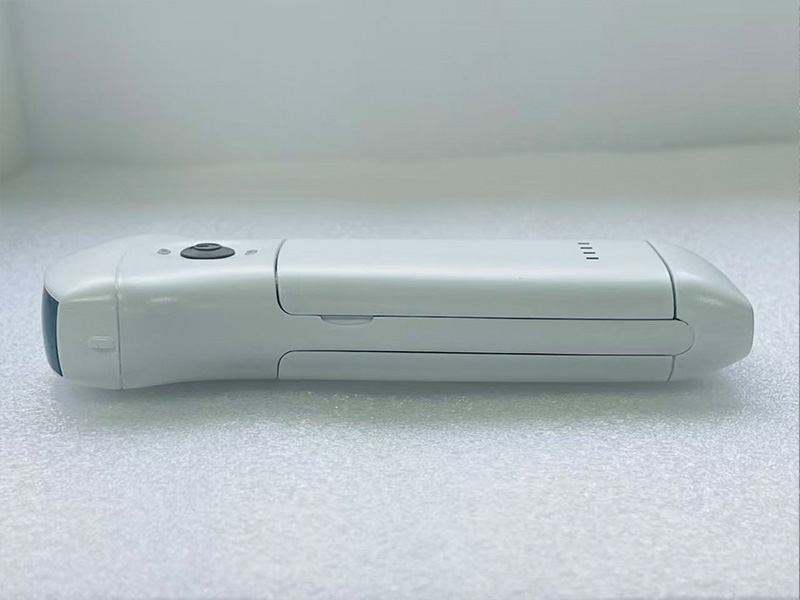
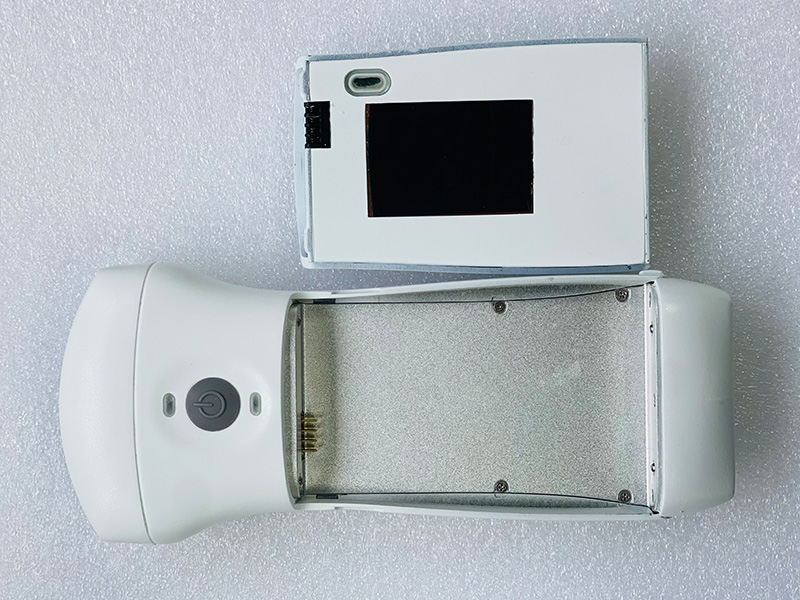
A single large internal battery is one approach; allowing the operator to swap cells is another. A review of ultrasound systems used in military settings highlights quick-change, hot-swappable batteries as a key feature where reliable power is not guaranteed (PMC12583298). SonoStar's 9-series handheld ultrasound probes (9N, 9L, 9C, 9CPL) follow this logic: each probe ships with two 2200 mAh batteries, each providing roughly 1.5 hours of continuous scanning, so a drained cell is replaced in seconds rather than ending the shift. The same review notes that limited battery life, slow charging and non-removable cells are common constraints in high-demand environments — which is why swappable design often beats a single larger capacity number. Note that swappable batteries are not universal across every product line; some series use built-in cells, so confirm the specific model rather than assuming the entire range works the same way.
Three Checks Before You Buy
Three questions settle most purchasing decisions. First, what is the continuous scanning time — not the standby figure? Second, can the battery be swapped, and how many cells are included? Third, how is it charged — USB, wireless, or both? Then match the answers to the busiest shift in your facility — outreach, emergency, or ward rounds — because the harshest scenario decides whether the device lasts a full day.
Frequently Asked Questions
How long does a handheld ultrasound battery last?
It depends on usage. Continuous scanning and standby differ greatly; for example, SonoStar 9-series probes ship with two swappable batteries, each lasting about 1.5 hours of continuous scanning.
Does Color Doppler really drain the battery?
Yes. Color and PW modes consume noticeably more power than B-mode, so prolonged Doppler use shortens runtime significantly.
What happens when the battery ages?
With a swappable design you replace the cell directly instead of sending the probe back — faster and less costly for the facility.
How long does recharging take?
It varies by model; most support USB and wireless charging. Confirm the exact time in the manufacturer's specification.
Are swappable batteries standard on all handheld ultrasound models?
No. Swappable cells are a feature of specific series; other models use built-in batteries. Verify per model, not per brand.
Match the Device to Your Longest Shift
Battery life is one of the most underestimated factors in selecting a handheld ultrasound, and the one most likely to interrupt a clinical day. Evaluate continuous scan time, swappable cells and charging convenience against your busiest shift rather than a single spec-sheet figure. SonoStar's 9-series wireless probes — with two swappable 2200 mAh batteries, USB and wireless charging, and deployments in more than 100 countries — are designed around exactly that kind of all-day use.




 Home
Home Product
 News
News Contact