


Biplane Wireless Color Ultrasound Probe: Why Two Planes Beat One for Needle Work
- 2026-11-26
- 42
- Guangzhou Sonostar Technologies Co., Limited
A biplane wireless color ultrasound probe carries two arrays in one head, set at an angle to each other, so the operator sees the target and the needle in two planes without changing probes. On a single-plane probe the needle appears as a line or as a dot. That difference is what a biplane head is bought for, and it is a geometry problem before it is a technology problem.
What biplane actually means
Two arrays, two beams, two images. The common configurations are a linear array paired with a convex one, two linear arrays at right angles, and the T-shaped endocavitary heads used for transrectal work. Each plane has its own beam and field, so the display shows two live views side by side or switches between them.
It is not the same as 3D. A volume probe reconstructs planes after the scan; a biplane head shows both planes while the needle moves, which is what a puncture needs.
Why needles disappear
A needle reflects sound strongly when the beam strikes it at a favourable angle and weakly when it does not. In-plane, the shaft appears as a bright line and the tip is easy to follow. Out-of-plane, the beam passes beside the shaft, and what remains is a faint dot at the tip, often lost in tissue texture.
The usual workaround is to fan or tilt until the needle appears, which moves image and target together and costs time. With a second plane, the needle shows in one view while the other confirms depth and lateral position, so the correction happens on the screen, not in the patient.

Where a biplane head earns its cost
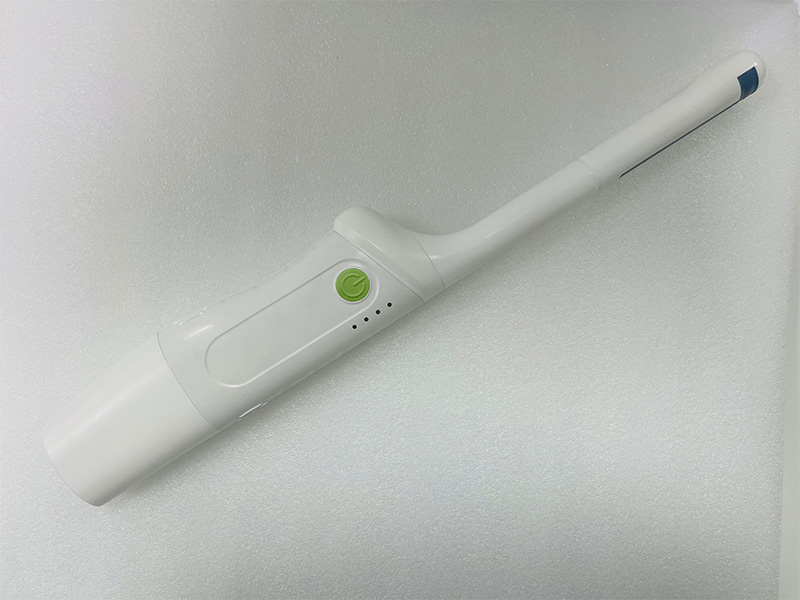
Prostate biopsy. A transrectal biplane head gives a longitudinal view of the needle track and a transverse view of the gland at once — the geometry systematic and targeted biopsy both need. The 9CR head in the SonoStar range is a rectal T-shaped biplane built for this.
Gynaecology and pelvic procedures. Endocavitary biplane views support follicle aspiration and pelvic collections, where the needle path is short but the structures around it are not.
Percutaneous access in urology. Needle direction and depth read in two planes before dilatation, the step where a correction is cheapest.
Deep vascular access and long needle paths. In a patient with a difficult habitus, the second plane shows whether the tip is drifting laterally while the in-plane view shows the depth. The same logic applies to regional blocks where the needle travels several centimetres.
Drainage of collections. Two planes separate "in the collection" from "beside it", the question that decides whether the aspirate returns fluid.
What it does not fix
The head does not teach puncture technique. Needle visibility still depends on the angle between the beam and the needle, on needle type, and on whether the tissue reflects; a biplane head reduces the guesswork rather than removing it.
Bone and gas still shadow. A rib or bowel loop between the probe and the target blocks both planes equally.
Endocavitary work has its own rules. A transrectal head needs a sheath and a cleaning protocol agreed with the department before the opening case, and the probe's sterility routine is part of the purchase, not an afterthought.
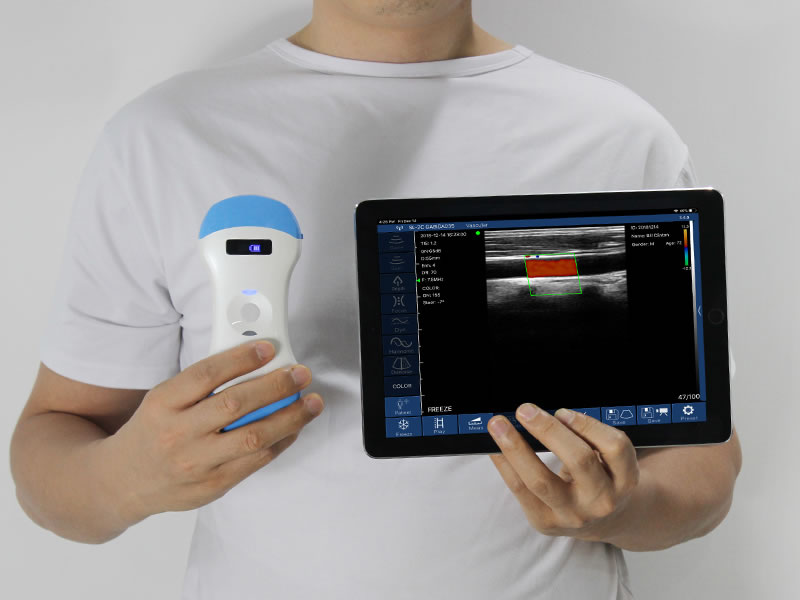
Colour flow sits on the 2D colour models. Confirm on the exact head that colour Doppler and the biplane display coexist, because a puncture that needs vessel confirmation needs both.
FAQ
Is a biplane probe a 3D probe?
No. A biplane head displays two planes live; a 3D head builds a volume and lets you re-slice it afterwards. The former is a puncture tool, the latter a review and documentation tool, and some departments need both.
Can it replace the ultrasound department for prostate biopsy?
It supports the procedure at the bedside or in the clinic with the department's sterility and pathology workflow. Formal staging and reporting stay with the department.
Which biplane wireless color ultrasound probe suits transrectal work?
A T-shaped endocavitary biplane head such as the 9CR for transrectal work; the linear T-shaped biplane, the 6DL, covers puncture guidance at other sites.
Does it work without a network?
Yes. The probe runs its own Wi-Fi access point, so a procedure room, a ward or a field clinic needs no network at all.
As a professional manufacturer, SonoStarMed provides high-quality mini color Doppler ultrasound with complete international certifications such as CE, FDA and ISO13485. Custom OEM and ODM services are offered for global distributors and medical institutions. Every device undergoes strict quality inspection before delivery to guarantee stable imaging quality and long service life.For any related needs or specific inquiries, please feel free to communicate: 18126862475.



 Home
 Product
 News
 Contact