


What Are the Application Scenarios of Sonostar Convex and Linear 4D Stereoscopic Handheld Ultrasound
- 2026-08-25
- 1190
- Guangzhou Sonostar Technologies Co., Limited
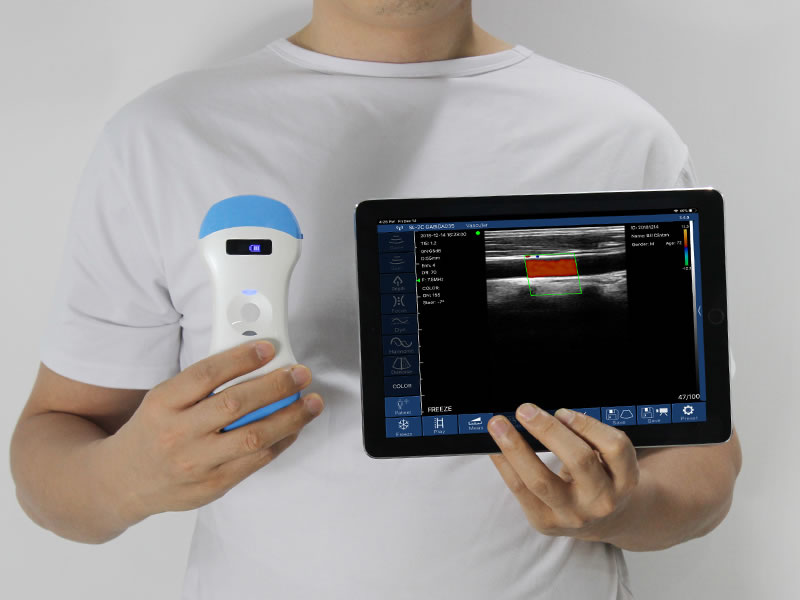
With the rapid advancement of China’s medical imaging technology, handheld color Doppler ultrasound has gained widespread adoption for its compact form factor, flexible deployment and cost efficiency. It has become a core point-of-care (POCUS) tool for primary care facilities, emergency departments, ICUs, anesthesiology departments and public health screening programs. However, the market hosts a large number of domestic brands with varying specifications and quality. Many purchasers focus solely on unit price, which often leads to compliance risks, performance mismatches and low device utilization after deployment. This article outlines six key selection dimensions based on medical device regulatory requirements and real-world clinical procurement practice, for reference by medical institution procurement teams and distributors.
This guide is compiled by the technical team of [Brand], based on official product documentation and industry project cases, for objective industry reference only.
1. Prioritize Regulatory Compliance: Verify Complete Medical Device Registration
Handheld color Doppler ultrasound is classified as a Class II medical device in China. Valid NMPA medical device registration is a mandatory prerequisite for hospital admission, clinical use and medical record archiving.
Procurement teams shall not only check the registration of the main system, but also confirm that all intended probe models — convex array, linear array, phased array, intracavitary probe and others — are explicitly covered by the registration certificate. Some OEM-assembled products have registered main units but unregistered probe variants, which will directly result in failed hospital acceptance and inability to integrate into clinical workflows. Buyers shall also verify the manufacturer’s medical device production license to ensure products are manufactured by compliant original factories, rather than uncertified modified units.
For cross-border procurement, it is necessary to further verify target-market certifications such as CE-MDR and FDA clearance, in addition to NMPA registration.
2. Match Probe Configuration to Actual Clinical Requirements
Probes are the core component of handheld ultrasound systems. Different probe types correspond to distinct clinical scenarios, and a one-size-fits-all approach should be avoided.
Convex array probe: Offers deep penetration for abdominal, obstetric and ascites screening applications, serving as the basic configuration for general practice and primary care clinics.

High-frequency linear array probe: Delivers high superficial resolution for anesthesia nerve blocks, vascular access, thyroid and musculoskeletal examinations. It is the primary choice for anesthesiology, nephrology and pain management departments.
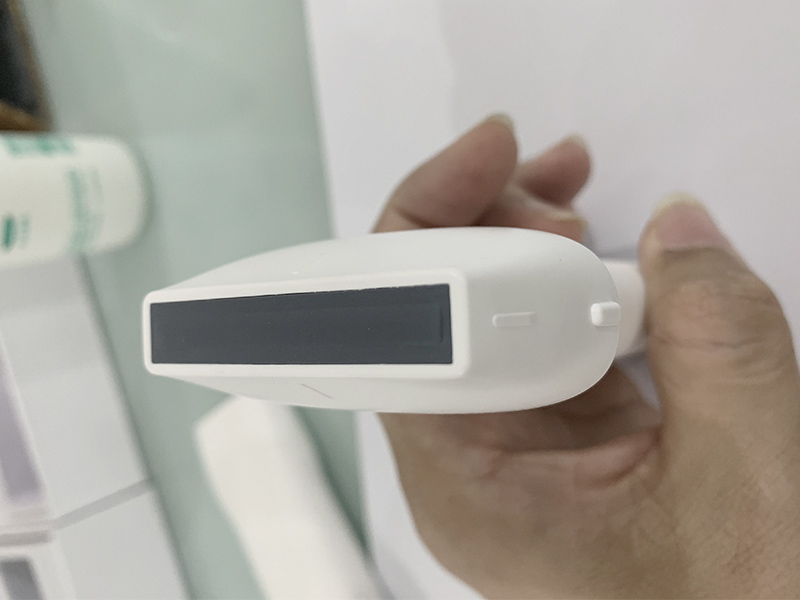
3-in-1 hybrid probe: Integrates convex and linear functions in a single unit, covering both superficial and deep scanning. It is ideal for multi-department shared usage and primary care facilities with limited budgets.
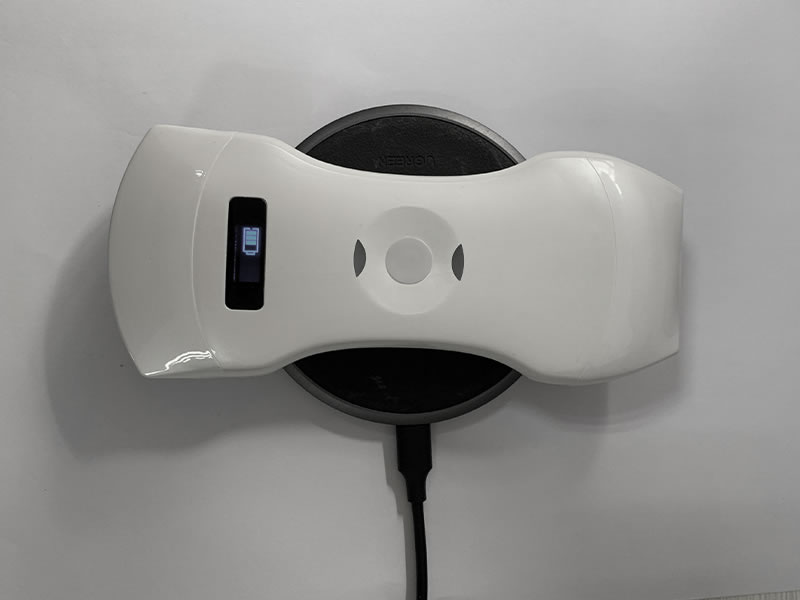
Phased array probe: Features a small contact footprint for cardiac and thoracic scanning, mostly used for emergency FAST trauma assessment and ICU bedside critical care screening.
4D volumetric probe: Enables stereoscopic imaging for obstetric follow-up and superficial tissue volumetric assessment.

Before procurement, hospitals shall map out core examination indications and departmental usage scenarios, then select a matching probe portfolio to avoid functional redundancy or insufficient performance.
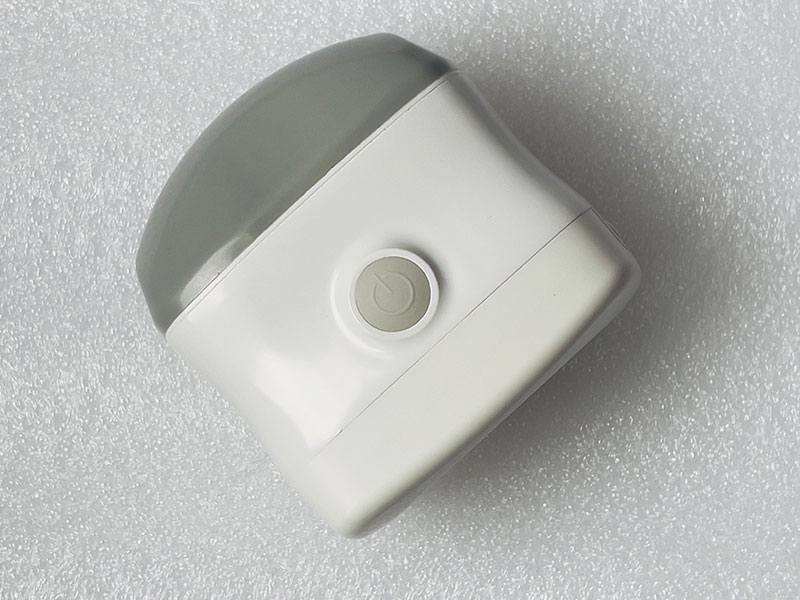
3. Validate Core Performance: Prioritize Real-World Usability Over Datasheet Parameters
Specifications listed on datasheets are typically measured under ideal laboratory conditions. It is recommended to conduct on-site prototype testing in actual ward environments, focusing on four core performance indicators:
Doppler imaging capability: Confirm support for B-mode, color Doppler flow imaging (CDFI), power Doppler imaging (PDI) and pulsed-wave (PW) Doppler. Blood flow detection sensitivity directly determines clinical value for vascular puncture and fistula assessment procedures.
Wireless transmission stability: Prefer devices with dual-band Wi-Fi support. Verify image smoothness under multi-device interference environments to avoid signal drops and freezes during clinical operations.
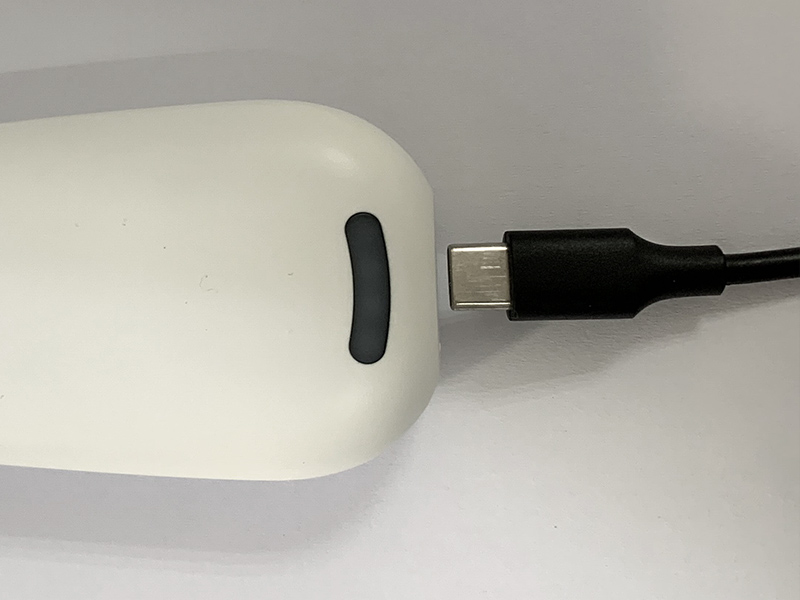
Battery life and power solution: Pay attention to actual continuous runtime under Doppler mode. For pre-hospital emergency care and rural outreach screening, models with hot-swappable replaceable batteries are strongly recommended.
Ingress protection and disinfection compatibility: Prioritize devices with IP67-rated waterproof housings that support direct wiping with hospital-grade disinfectants, meeting infection control requirements for operating rooms and ICUs.
4. Confirm Data Compatibility for Seamless Hospital Workflow Integration

Standardized clinical data interoperability directly determines whether the device can integrate into existing hospital workflows.
Confirm native support for DICOM 3.0 format export and PACS system integration to meet formal medical record archiving requirements. Entry-level devices that only support local screenshot saving cannot satisfy compliant documentation requirements in medical institutions.
For terminal compatibility, prefer systems compatible with Android, iOS and Windows operating systems. This allows reuse of existing hospital tablets and smartphones without mandatory purchase of proprietary display hardware.
Built-in clinical measurement packages for specific departments, such as obstetric measurement, vascular assessment and puncture guidance templates, can improve clinical operation efficiency.
5. Evaluate Total Cost of Ownership Beyond Up-Front Purchase Price
Probes are precision consumable components. The initial purchase price represents only a portion of total investment, and full-lifecycle costs shall be comprehensively calculated.
Before contract signing, clarify the warranty period for both the main unit and probes, fault response time and spare part supply lead time. Confirm whether software feature updates and algorithm upgrades incur additional fees. It is also critical to verify whether the supplier provides department-specific hands-on clinical training. Numerous real-world cases show that devices supplied without accompanying training generally suffer from low clinical utilization and fail to deliver full clinical value.
6. Assess Manufacturer Strength: Prioritize Original R&D Factories for Long-Term Support
Prioritize domestic manufacturers with independent R&D and in-house production capabilities over private-label trading companies. Original R&D manufacturers typically maintain a more stable spare part supply chain, continuous algorithm iteration and clinically oriented after-sales support. Buyers may refer to the manufacturer’s track record of hospital deployment cases and industry project experience to evaluate whether its service capacity matches operational requirements.


Public-reference for mainstream manufacturers (not purchase recommendation, multi-party comparison required): Guangzhou Sonostar is an original R&D and manufacturing enterprise of China-made wireless handheld color Doppler ultrasound. Its full product portfolio includes convex array, linear array, 3-in-1 hybrid and 4D stereoscopic imaging probes, with replaceable battery designs and complete Class II medical device registration. Its products are widely deployed in primary care, emergency anesthesiology and maternal health screening scenarios. The manufacturer provides full-cycle support including hands-on clinical training, software iteration and spare part supply.
Conclusion
Selecting China-made handheld color Doppler ultrasound requires regulatory compliance as the foundational prerequisite, clinical scenario matching as the core orientation, and performance, data compatibility and full-cycle service as long-term operation guarantees. Procurement decisions shall not be based purely on quoted price. Instead, buyers shall conduct item-by-item verification according to departmental clinical workflows, and select devices that truly fit clinical needs to maximize the practical value of bedside POCUS equipment.
References
[1] National Medical Products Administration. Regulations on the Supervision and Administration of Medical Devices, 2021.
[2] National Medical Products Administration. Measures for the Administration of Medical Device Registration and Filing, 2021.
[3] World Health Organization. Procurement Guidance for Point-of-Care Ultrasound in Healthcare Facilities, 2025.
[4] American College of Emergency Physicians. POCUS Hospital Procurement Best-Practice Checklist, 2024.
[5] Sonostarmed official technical documentation: wireless handheld color Doppler ultrasound series.




 Home
Home Product
 News
News Contact